

The Glow
A story about people and pejoratives

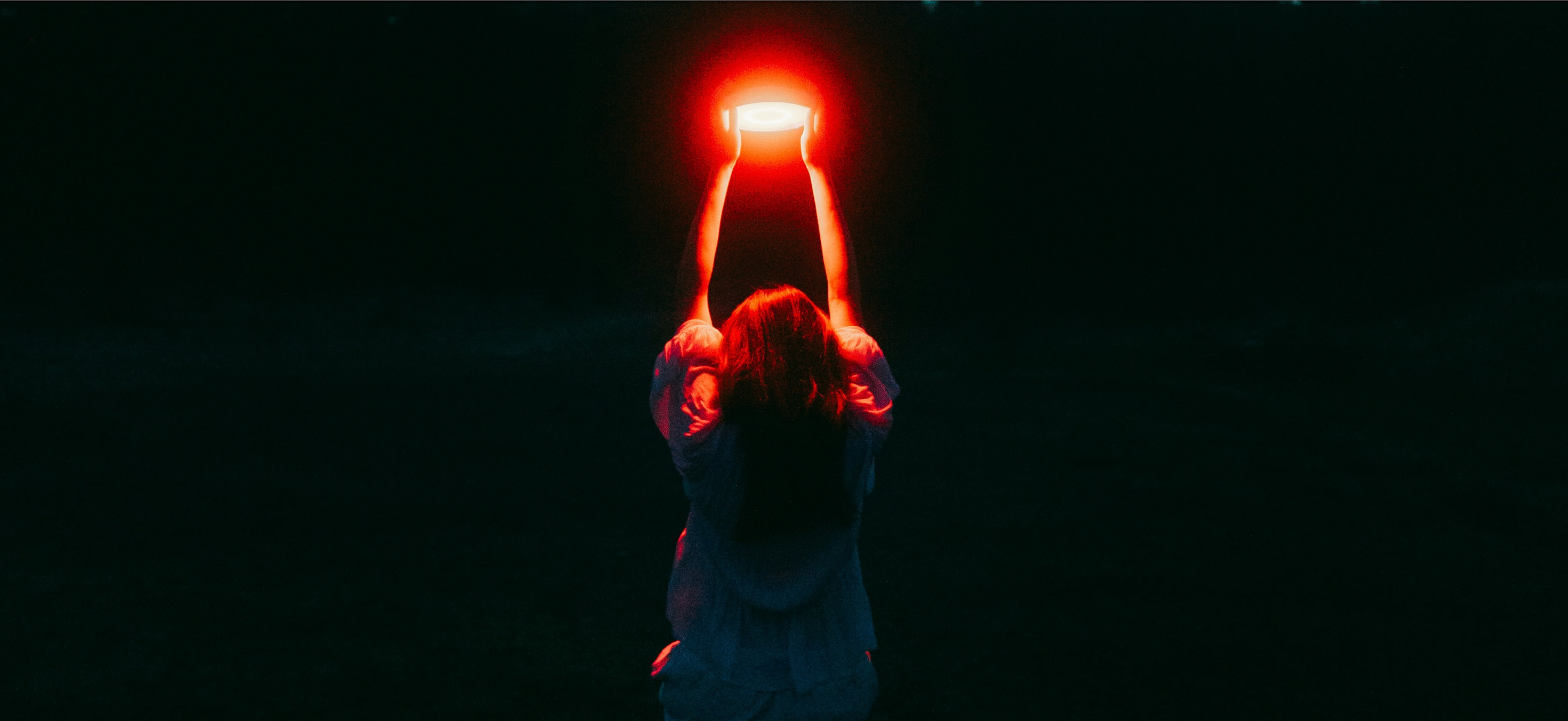
Sadie and I were in bed when I first noticed it.
“Honey,” I said. “Are you glowing?”
“What? No. Don’t be silly.”
But I wasn’t being silly. Beneath the bedsheets I could see a faint luminescence emanating from her skin.
It had been on the news, of course. Sadie was hardly the first case. But we were concerned. We went to the doctor.
“I don’t think there’s anything to be concerned about.”
We disagreed.
“As far as we can tell,” she said, “it’s only cosmetic. It doesn’t affect your health, your cognition. You just… glow now.”
And that was essentially it. Sadie glowed now. It wasn’t unpleasant. She was otherwise entirely healthy. But when the lights went down, there she was.
We first came across another “glow-er” at the movies. While the trailers ran, Sadie and I struck up a conversation. But there wasn’t much they had in common except for their condition, and words were faltering when abruptly a bucket of popcorn flew at us all.
“Piss off highlighters!”
I whirled around, but Sadie grabbed my arm. “Don’t make it worse.”
Of course that wasn’t the end of it. At night, I started to notice people who crossed the road as we approached. And it might have been innocent. But also, it might not have been.
And then on the streets, I’d see graffiti, “Lights out for highlighters,” “If you glow, you gotta go,” and more simply “Fuck off glow-ers.”
Sadie was very tolerant of it all. She told me there was no point being angry all the time. Some people were simply ignorant, and we didn’t need to let their prejudice into our lives. But it was a background noise of catcalling that grated though our lives.
And then the politicians started weighing in. There had been a few outspoken types, asking if it was safe to be around glow-ers, citing discredited studies about spikes in cancer, herding people into categories of “us” and “them.” But it really went mainstream with the mid-terms.
“Moral decay, that’s what it is.” It was some senatorial wannabe from Alabama. “You ever noticed who it is who glows? It ain’t good Christian folk, I’ll tell you that.”
“Bullshit!” I yelled at the screen.
“Honey…” Sadie laid an hand on my arm.
But I think my attitude was right. Because others followed in the Alabama senator’s wake, a slew of hatred and prejudice washing across social media. I saw ads for “Glow shields” on Youtube. Sales of sunscreen spiked. Vitamin supplements made claims about preventing the glow that hadn’t been reviewed by the FDA.
And then there was the graffiti scrawled on Sadie’s car. And the brick thrown through our window. And the story of the attack down in Florida. And then in Georgia. And then in New Jersey. Violence was creeping closer and closer to our home.
At this point, people who glowed (the terminology had changed, “glow-er” now being viewed as pejorative) were starting to form support groups. We’d joined one, and a woman there called Cathy was the first to introduce the idea of a retreat.
“A space where we’re free to be ourselves,” she said.
“So, we just round ourselves up into camps for them?” said Walter, who was always the first to voice a contrary opinion. But I feared he had a point.
But things were unraveling now at a pace that none of us could control. The Alabama senator won his election in a landslide. The question of what was to be done with people who Glowed was almost constantly on the front page.
“Nothing!” I would yell at the paper. “They’re just regular people!”
“Are we though?” Sadie said.
“You just glow.” I held her.
“Yes,” she said. “And you don’t.”
Then, a man who glowed was killed a few blocks from us.
We went on the retreat. I insisted. A lot of the groups were doing this now, finding properties upstate on isolated land. We took enough clothes for a week. We stayed for two months. More and more were coming up here. Me and a few of the other spouses who didn’t glow were sent out for supplies. We didn’t go to the local stores, but traveled further afield to the big box places where we were less likely to be recognized.
It wasn’t what I’d ever imagined for us, and I hated that it was necessary, but it was also a little bit peaceful those first months. Feeling self-sufficient. Being with like-minded folk.
Except…
Not everybody glowed the same. Some people, you could see it during the day. Some it was barely visible at night. And then there were folk like me who didn’t glow at all.
A sort of tier system started to emerge. The brighter you were, the higher up you were. And I was right down at the bottom.
Sadie started to ask me to stay at home when she went out to social events. She started ignoring some of our friends who didn’t glow so brightly.
I confronted her about it. She told me I wouldn’t understand.
“You’re not like us.”
It was almost a relief when the attack came. A bunch of locals hopped up on “doing their own research,” convinced they were saving the world. The police wrapped it up when there were still only injuries, no deaths. And after fear fled, camaraderie returned for a while.
“It was silly to get caught up in how bright people were,” Sadie told me. “It’s just sometimes it feels like it’s hard for anyone who’s not like us to understand.”
“I understand,” I said. “I’ve been there with you since the beginning. I’ve always been on your side. Just like you’d always have been on my side if it had been me.”
She was quiet then, and chewed her lip.
“Right?” I said.
And still she was very quiet.
“Right?”
“Paul,” she said, “I think your skin might have started to whistle.”
Thank you for reading Something’s a Little Off. Fun fact: I have a novella coming out on September 15th. You can pre-order it today.